
Sep 24, 2026Risk & Compliance
How to Import & Register an L2e Electric Cargo Tricycle in Europe: Full EEC Compliance Guide for 2026
A complete 2026 B2B guide to importing and registering L2e-U electric cargo tricycles in Europe. Covers Regulation (EU) 168/2013, CoC vs IVA pathways, payload calculations, TARIC tariffs, SKD packagin
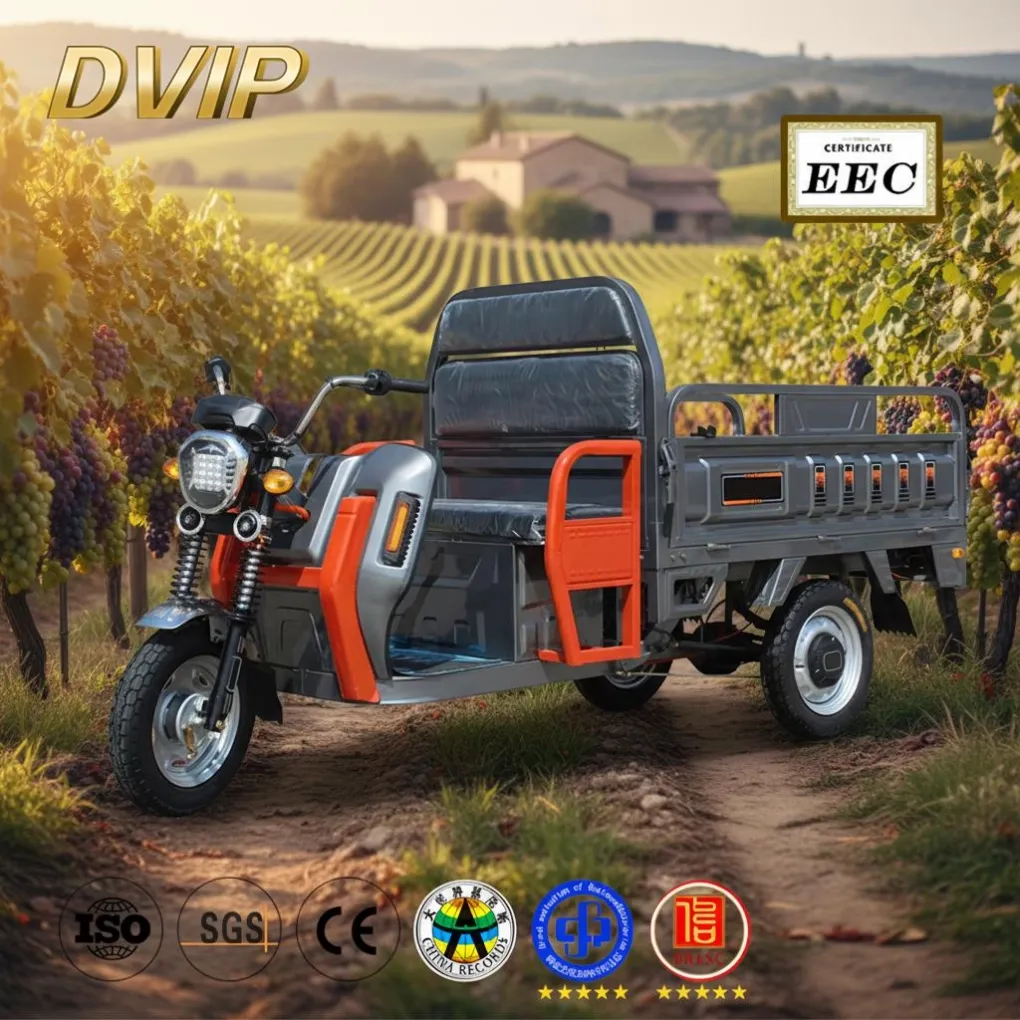
How to Import & Register an L2e Electric Cargo Tricycle in Europe: Full EEC Compliance Guide for 2026
Introduction: Cleared Customs ≠ European
Quick Answer
Clearing EU customs is not the same as making an L2e-U electric cargo tricycle road-legal. Customs checks commercial and dangerous-goods paperwork; road legality depends on an accepted type approval — either EU Whole Vehicle Type Approval (EUWVTA) with a per-unit Certificate of Conformity (CoC) matching the stamped 17-digit VIN, or a national Individual Vehicle Approval for small/custom batches.
The three facts most importers get wrong:
1.For electrically propelled L2e vehicles, the traction-battery mass is excluded from the 270 kg Mass in Running Order (MRO), which allows for a significantly higher usable payload.
2.Usable payload is calculated as TPMM - MRO - Crew - Final Bodywork per the CoC — never trust a generic brochure figure.
3.After any battery swap or cargo-body change, the vehicle may fall outside the approved CoC variant and be refused registration. Tariff and registration rules still differ per member state — verify the HS 8711.60 duty on TARIC and local licensing/insurance paths in each country of use.
Table of Contents
- Why customs clearance ≠ road legality
- What L2e-U actually is (and the battery-mass point)
- EUWVTA vs Individual Vehicle Approval — which path?
- Documentation checklist
- Battery, mass and payload verification
- Bodywork, CoC variants and modification risk
- Customs: HS code, TARIC duty and VAT
- CBU / SKD / CKD strategy
- Member-state differences matrix
- FAQ
- Sources & official references
1. Why Does Clearing EU Customs Not Make a Tricycle Road-Legal?
Short answer: Customs authorities verify commercial invoices, bills of lading, and dangerous-goods documents (e.g., UN 38.3 for lithium packs). They do not assess whether the vehicle complies with Regulation (EU) 168/2013. Road legality is decided later, by the national registration authority, against the vehicle’s type approval and CoC.
For European B2B importers, agricultural-machinery distributors, and commercial fleet operators, L2e-category electric cargo tricycles — three-wheel utility mopeds for goods, capped at 45 km/h — sit in a highly profitable niche: delivering significantly more payload than an e-cargo bike at a fraction of the running cost of a commercial van.
However, a very common and expensive failure mode occurs after the container lands: a missing battery-safety report, an incomplete Technical Specification Sheet, or a VIN that does not match the CoC will leave perfectly functional vehicles legally trapped in the warehouse.
This guide is a practical, pan-European compliance roadmap for sourcing L2e-U utility vehicles correctly.
2. What Is an L2e-U Electric Cargo Tricycle?
Under Regulation (EU) No 168/2013, L2e-U is the utility subcategory of the three-wheel moped (L2e) class, designed exclusively for the carriage of goods, with a loading area separated from the seating position by a rigid partition.
Criterion | Typical L2e-U value |
Wheels | 3 |
Maximum design speed | ≤ 45 km/h |
Maximum continuous rated power | ≤ 4 kW |
Mass in Running Order (MRO) | ≤ 270 kg for the approved type |
Seating positions | Up to 2, with cargo-only loading area |
The Point Most Brochures Get Wrong: Traction Battery Mass
For electrically propelled L2e vehicles, the mass of the traction battery is explicitly excluded from the 270 kg MRO calculation under Regulation (EU) 168/2013. This is precisely why a compact L2e-U chassis can support a heavy usable payload — and why you should never read "270 kg MRO" as "the vehicle can only carry this much." It is a regulatory classification threshold, not a cargo capacity limit.
Always verify the exact wording, including any exclusions, in the approved type-approval dossier and the individual CoC for the specific configuration you are buying.
Why L2e-U is Commercially Attractive for EU Fleets
- Goods-only loading area with partition: Clean, insurable, and registrable utility role across all EU states.
- 45 km/h design speed: Perfectly suited for urban last-mile logistics, industrial campuses, farms, and resort tracks.
- Lead-acid or Lithium options: Flexible battery configurations to match customer duty cycles and budget constraints.
- Enclosed / Flatbed / Hydraulic variants: Highly adaptable across agriculture, hospitality, and municipal street services.
3. EUWVTA vs Individual Vehicle Approval — Which Path Fits?
Short answer: Volume importers require EUWVTA so each unit ships with an original CoC for direct registration; small or custom batches use national Individual Vehicle Approval, inspected unit-by-unit.
Path A — EU Whole Vehicle Type Approval (EUWVTA / CoC)
- Best for: Established distributors importing volume shipments (e.g., 50+ units/year).
- Process: The vehicle model is type-approved by an EU Technical Service (e.g., TÜV SÜD, DEKRA, IDIADA, RDW).
- Registration: Each unit arrives with a factory-issued CoC matching its VIN. Registration is straightforward at national authorities, subject to local registration, insurance, and administrative requirements — rather than "automatic everywhere."
Path B — Individual Vehicle Approval (IVA / National Single Approval)
- Best for: Market testing (1–10 demo units) or specialized custom builds.
- Process: Every individual vehicle is physically inspected at an authorized national technical testing facility.
- Cost: Expect per-unit testing fees (typically in the low-to-mid hundreds of euros), provided the underlying UN/ECE component reports are complete and valid.
- Limitation: Approval is specific to that member state with no EU-wide CoC issued.
Terminology Note: Do not confuse an "EEC certificate" with EUWVTA. "EEC" is an outdated regulatory term. For 2026 planning, always specify EU Type-Approval / WVTA and applicable UN Regulations (formerly ECE). A vague "EEC approved" claim from a supplier is legally insufficient.
- Documentation Checklist for EU Importers
Document | Purpose | EUWVTA (Path A) | Individual Approval (Path B) |
Commercial Invoice & Packing List | EU Customs clearance | Mandatory | Mandatory |
Bill of Lading & Certificate of Origin | Freight / preferential tariff calculation | Mandatory | Mandatory |
Certificate of Conformity (CoC) | Direct member-state registration | Mandatory (Original) | N/A |
Technical Specification Sheet (TSS) | Powertrain / mass / dimension specifications | Standard | Mandatory (English/Local) |
UN R100 Certificate | Electric vehicle battery electrical safety | Included in Type Approval | Mandatory / Referenced |
UN R10 Certificate | Electromagnetic Compatibility (EMC) | Included in Type Approval | Mandatory / Referenced |
UN Component Reports | Lighting (R3/R7), Brakes (R78), Tyres (R75) | Included in Type Approval | Mandatory / Referenced |
ISO 3779 17-digit VIN & WMI | Permanent chassis frame stamping | Mandatory | Mandatory |
Critical Verification Rule: The 17-digit VIN permanently stamped on the chassis frame must match the CoC and customs paperwork character-for-character. A single character mismatch will cause registration refusal at national licensing offices.
5. Battery, Mass, and Payload Verification
Three primary mass parameters determine whether your electric cargo tricycle can be legally registered and safely operated:
- MRO (Mass in Running Order): Approved base mass of the vehicle (excluding traction battery mass for electric propulsion).
- TPMM (Technically Permissible Maximum Mass): Maximum legally allowable gross mass stated on the CoC.
- Final Configuration Mass: Physical weight of the cargo body, accessories, and crew present at registration.
Legal Usable Payload Formula
Usable payload is an engineering and legal calculation, not a marketing claim:
Available Usable Payload = TPMM - MRO - Crew/Rider Mass} - Additional Non-MRO Bodywork/Accessories
Commonly, EU L2e-U configurations deliver a practical usable payload ranging from 300 kg to 600+ kg depending on chassis engineering. The legally defensible figure is whatever the individual CoC supports for that exact variant — never rely on a brochure "800+ kg" headline. Always confirm TPMM, MRO, and permitted axle loads against the CoC before quoting payload figures to fleet customers.
6. Bodywork, CoC Variants, and Modification Risk
This is where L2e-U imports most frequently fail compliance. Vehicle registration is variant-specific.
If a delivered vehicle’s cargo body, battery chemistry, seating arrangement, overall dimensions, or mass profile differ from the approved variant on the CoC, national authorities can refuse registration.
Practical Compliance Rules Before Ordering:
- VIN Alignment: Verify that the physical chassis VIN matches the CoC document prior to shipment.
- Approved Cargo Bodies: Ensure custom cargo boxes or hydraulic dump beds fall strictly within the approved CoC variant scope (not modified off-spec post-production).
- Battery Swaps: Treat a lead-acid to lithium battery swap as a new technical configuration (not a simple part exchange). It alters mass distribution, electrical architecture, charging safety, and vehicle stability.
- Recalculate Payload: Re-verify $\text{TPMM} - \text{MRO}$ whenever factory bodywork or fixed accessories are altered.
- Manufacturer Traceability: Maintain consistent production specifications across the entire order batch.
7. Customs: HS Code, TARIC Duty, and VAT
For an electrically propelled L2e three-wheeler entering the European Union, the relevant tariff heading is HS 8711.60 (Motorcycles/mopeds with electric motor for propulsion).
- EU Customs Duty: Do not assume a fixed arbitrary percentage. Electric mopeds under HS 8711.60 generally enter the EU with a baseline 6% third-country duty rate (erga omnes). Always verify the live TARIC database for your specific origin to check for trade preferences or active anti-dumping measures.
- Import VAT: Levied in the destination member state based on taxable customs value plus duty. Rates vary by country (e.g., DE 19%, ES 21%, FR 20%, IT 22%, NL 21%).
- Commercial Accounting: For VAT-registered commercial businesses, import VAT is generally recoverable through normal tax deduction mechanisms rather than remaining a permanent cost.
8. CBU / SKD / CKD Strategy
Selecting the correct packaging method directly impacts landed vehicle cost, container freight efficiency, and local assembly overhead:
Shipping Method | Vehicle Assembly Status | 40HQ Density (Indicative) | Local Labor & Facility Needs | Strategic Fit |
CBU
(Completely Built Up) | 100% Fully Assembled | Low
(~15 – 20 units) | Zero
No local assembly staff required. | Trial orders, demo units, or buyers with zero workshop capability. |
SKD
(Semi-Knocked Down) | Semi-Assembled
(Wheels, handlebars, mirrors, and cargo panels detached) | High
(~20 – 44 units) | Low to Moderate
Basic tools; ~20–30 mins assembly per unit.vehicle. | Most EU B2B Importers & Dealers (Optimal balance of sea freight savings and low labor overhead).local labor). |
CKD
(Completely Knocked Down) | Fully Disassembled
(Chassis, powertrain, harness, and panels separate) | Maximum
(~32 – 85+ units) | High
Requires dedicated workshop, trained technicians, and QA testing. | Established regional distributors with high volume and local assembly strategies. |
Strategic Note: For most European distributors, SKD is the sweet spot. It cuts per-unit sea freight costs by maximizing 40HQ container utilization while maintaining factory-certified assembly standards for critical safety systems (brakes, wiring, drivetrain). Note that shipping method does not alter regulatory classification — CoC requirements apply identically across CBU, SKD, and CKD.
9. Member-State Differences Matrix
While EUWVTA + CoC provides a harmonized pan-European type approval, local registration execution, licensing, and urban access policies vary. Use this matrix for operational planning:
Country | Driver Licence (General EU Basis) | Registration & Licensing Notes | Urban / Environmental Access Rules | Standard VAT |
Germany | Class AM, or Class B | Zulassung / Insurance plate via Kraftfahrt-Bundesamt; eVB insurance code required | Umweltzonen access; local municipal ordinances | 19% |
Spain | Class AM, or Class B | DGT Matrícula de ciclomotor (Yellow plate); Distintivo Ambiental CERO label | ZBE (Zonas de Bajas Emisiones) municipal access rules | 21% |
France | Class AM, or Class B | Certificat d’immatriculation via ANTS; Crit'Air environmental classification | ZFE-m (Zones à Faibles Émissions) access rules | 20% |
Italy | Class AM, or Class B | PRA / ACI registration, Libretto, mandatory RC Auto insurance | ZTL (Zone a Traffico Limitato) municipal rules | 22% |
Netherlands | Class AM, or Class B | RDW Kenteken registration; moped license plate & insurance required | Municipal environmental zones (Milieuzones) | 21% |
10. Frequently Asked Questions (FAQ)
Q1: Does clearing EU customs automatically make my L2e-U tricycle road-legal?
A1: No. Customs checks commercial invoices and dangerous-goods shipping documents (UN 38.3). Road legality requires an accepted type approval (EUWVTA or Individual Approval) plus a verified CoC and VIN match at the destination member-state vehicle registry.
Q2: Is the 270 kg MRO limit the maximum payload the vehicle can carry?
A2: No. MRO is a vehicle mass classification limit. Under Regulation (EU) 168/2013, traction-battery mass is excluded from MRO for electric L2e vehicles. Legal usable payload is calculated separately as TPMM - MRO - Crew - Bodywork.
Q3: Should a distributor choose EUWVTA or Individual Vehicle Approval?
A3: EUWVTA with factory-issued CoC is best for volume distributors (50+ units/year) seeking fast, standardized registration. Individual Vehicle Approval (IVA) is suitable for small sample batches (1–10 units) or specialized custom builds.
Q4: Can I replace lead-acid batteries with lithium batteries or alter the cargo box after delivery?
A4: Any uncertified modification alters the technical configuration. Changing battery chemistry, mass distribution, or cargo dimensions can invalidate the CoC variant and lead to registration refusal. All modifications should be certified at the factory level prior to production.
Q5: What customs duty rate applies to electric cargo tricycles entering the EU?
A5: Electric cargo tricycles fall under HS 8711.60 with a baseline 6% third-country duty rate (erga omnes). Always verify the live rate on the EU TARIC database along with destination import VAT.
11. Official Regulatory References
For commercial deployment, verify technical compliance against official regulatory portals:
- EUR-Lex — Regulation (EU) No 168/2013: L-category type approval, L2e-U definitions, and MRO/battery mass rules.
- EUR-Lex — Directive 2006/126/EC: EU driving-licence harmonisation (Category AM & Category B).
- EU TARIC Database: Live HS 8711.60 customs duty, anti-dumping measures, and tariff rules.
- UNECE Regulations: UN R100 (Battery Safety), UN R10 (EMC), UN R78 (Braking), UN R75 (Tyres).
- National Licensing Authorities: KBA (Germany), DGT (Spain), ANTS (France), RDW (Netherlands), ACI (Italy).
Related European & Regional B2B Buyer’s Guides
Planning to expand your commercial fleet or distribute utility EVs across Europe and surrounding markets? Explore our dedicated country guides:
Germany Market Guide: L2e-U Electric Cargo Tricycles in Germany: Complete B2B Buyer’s Guide & StVZO Compliance
Spain Market Guide: L2e Electric Cargo Tricycles in Spain: B2B Guide for Agriculture, Resorts & ZBE Zones
Romania & CEE Market Guide: Electric Cargo Tricycles in Romania: Regional Industrial Growth & Central European Distribution Hubs
Turkey Market Guide: Electric Cargo Tricycles in Turkey: OSB Industrial Logistics, Agriculture & Regional Gateway
Ready to Source L2e-U Utility Tricycles for Your Market?
Contact our engineering and export compliance team today with your target destination, payload requirements, and duty cycle. We will provide a complete technical specification sheet, CoC verification package, and optimized SKD container loading calculation.